
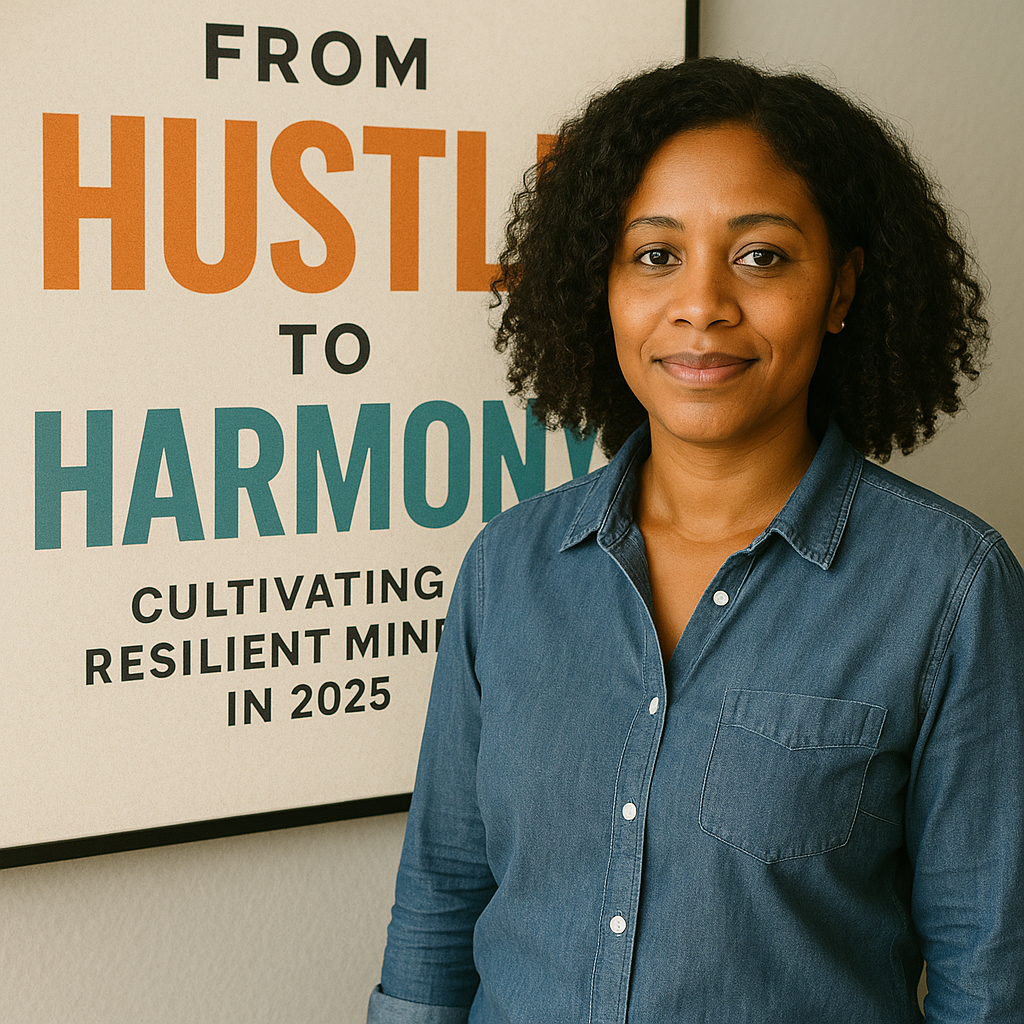
I used to believe that confidence meant pushing harder, doing more, proving myself at every turn. But the harder I pushed, the more worn I felt—out of sync, depleted, doubting. It was only when I slowed, framed my ambition differently, and learned to flow with intention that my edge sharpened.
In this post, you’ll discover how to shift from relentless hustle to resilient harmony — and in doing so, own a confidence that lasts.
The Mindset Shift: Hustle → Harmony
A “hustle mindset” tells us: more hours, more output, more sacrifice. It promises rewards if we just push past our limits. But the hidden cost is high: burnout, diminishing returns, blurred boundaries, internal pressure.
Contrast that with a harmony mindset — one that invites alignment between what you do and who you are. It acknowledges that sustainable confidence doesn’t come from grinding nonstop, but from growing with purpose, rest, and adaptation.
When you adopt harmony, you begin to trust your inner compass more than external measures. You listen to your energy, calibrate when needed, and move forward with steadiness—not frenzy.
Core Pillars of a Resilient, Harmonious Mindset
- Adaptability & Growth
Change isn’t your enemy — it’s your teacher. When you see challenges as data, not insults, you become nimble. For example: instead of resisting a project shift you didn’t expect, ask: “What can I learn from this detour?” - Intentional Rest & Recovery
Recovery isn’t a reward — it’s part of your operating system. Just as muscles need rest to grow, your mind, spirit, and confidence need pauses. That might look like quiet time, nature walks, mindfulness, or simply saying “no” to one extra commitment. - Values-Driven Action
Confidence becomes clear when your choices filter through your core values. Before accepting or pursuing something, ask: “Does this align with who I want to be?” Saying “no” to misalignment is part of owning your edge.
How Owning Your Confident Edge Uses This Mindset
When you ground your confidence in harmony, your “edge” becomes an internal compass rather than a performance facade. You move forward because it feels right, not just because you’re trying to impress or prove.
For example: a client I worked with used to say “yes” to every opportunity because she feared missing out. Over time, she learned to say “no” to things that didn’t align with her vision. That allowed her to reserve energy for fewer, more impactful efforts — and her confidence rose as her impact deepened.
Practical Steps & Reflection Prompts
- Experiment this week: Pause for 15 minutes midday to rest, reflect, or breathe. Observe how your next 2–3 hours feel.
- Reflection questions:
- When today did I push even though I felt resistance?
- What would I have done differently if I’d paused first?
- What small win can I celebrate today to reinforce my confidence?
If this shift resonates, I’d love to hear what experiment you choose. Share in the comments or email me, and perhaps we’ll feature these stories in future posts.
Hon. Evelyn J. Laporte
Own Your Confident Edge